
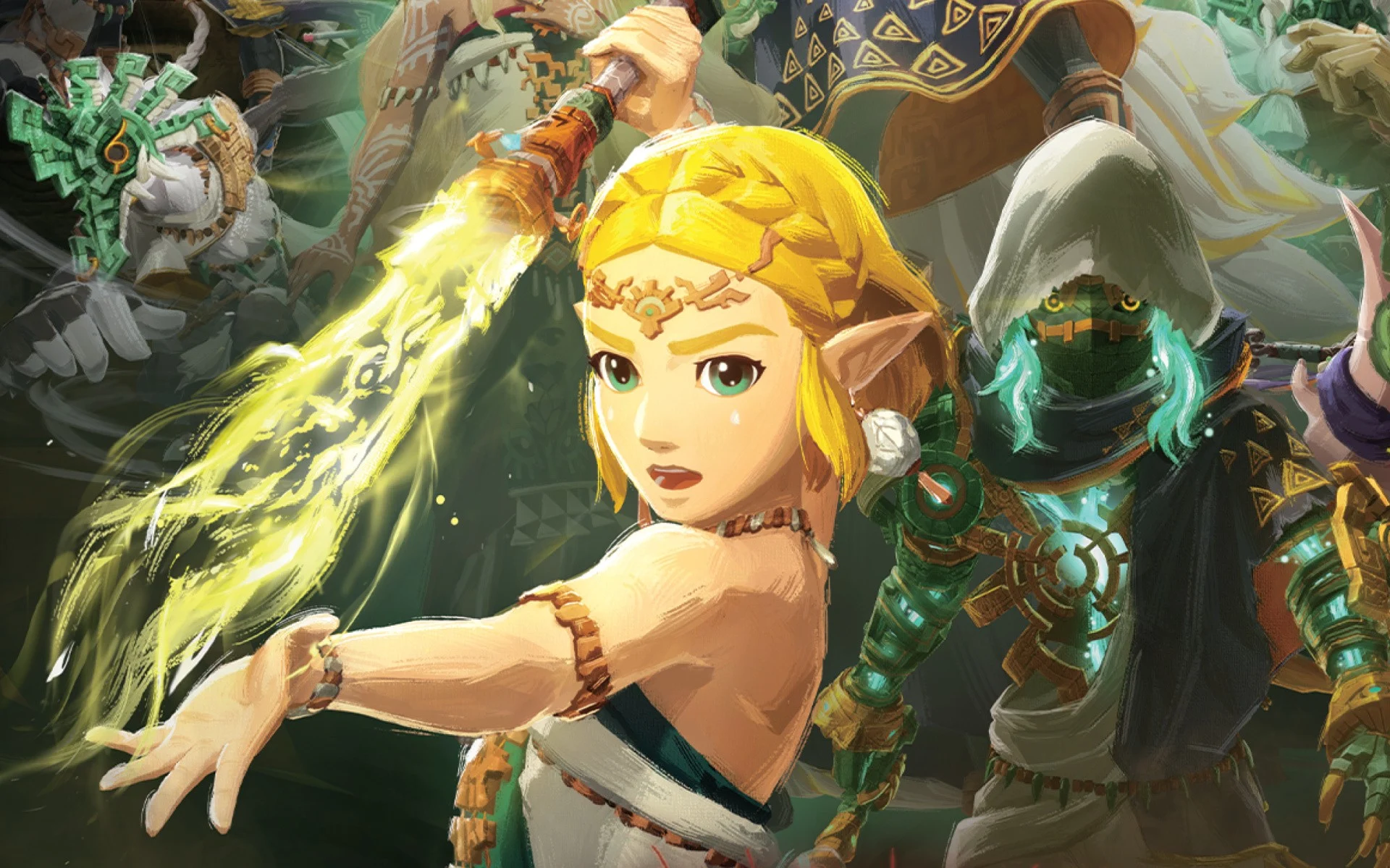
“Let’s Make It!” – Nintendo and Koei Tecmo on the Genesis of Hyrule Warriors: Age of Imprisonment. Sometimes, the biggest projects don’t start with long pitch decks or years of planning — they start with a simple idea and the right people in the room. According to new insight shared by Nintendo and Koei Tecmo, that’s exactly how Hyrule Warriors: Age of Imprisonment came to life.
In a recent discussion reflecting on the project’s early days, developers from both companies described a refreshingly straightforward origin story — one driven by trust, shared enthusiasm, and a mutual desire to explore a new angle within the Legend of Zelda universe.
A Simple Spark: “Let’s Make It”
The phrase that keeps coming up in the discussion is surprisingly casual: “Let’s make it.” According to the developers, there wasn’t an elaborate multi-year roadmap at the beginning. Instead, the idea emerged organically as Nintendo and Koei Tecmo reflected on their past collaborations and the potential for another Warriors-style project set in Hyrule.
After the success of earlier Hyrule Warriors titles, both sides recognized that there was still unexplored territory within Zelda’s rich lore — particularly when it came to historical events and large-scale conflicts that naturally lend themselves to Musou-style gameplay.
Rather than forcing the idea into existence, the teams aligned quickly on a shared vision: if they were going to do it again, it needed to feel meaningful, not repetitive.
Why Age of Imprisonment?
One of the most interesting revelations is how early the setting and theme were locked in. Age of Imprisonment wasn’t chosen simply because it sounded dramatic — it was selected because it allowed the developers to tell a story that felt both epic and foundational to the Zelda timeline.
From a gameplay perspective, the era made perfect sense:
- Large-scale battles
- High-stakes conflict
- Iconic characters at pivotal moments
- A natural justification for massive enemy encounters
From a narrative standpoint, it offered something fans are always eager for: deeper insight into Hyrule’s past, without being constrained by the exact structure of a mainline Zelda title.
This balance — honoring lore without being boxed in by it — was central to the project’s appeal.
Trust Built on Past Collaboration
Nintendo and Koei Tecmo’s partnership didn’t begin with Age of Imprisonment. Their working relationship has been shaped over years of collaboration, which helped streamline the early decision-making process.
Nintendo brought:
- Deep understanding of Zelda lore and tone
- Clear expectations for quality and consistency
- Guidance on characters, world-building, and canon
Koei Tecmo contributed:
- Musou design expertise
- Experience with large-scale action systems
- Technical know-how for handling massive on-screen battles
Because both teams already understood each other’s strengths, there was less friction and more creative momentum. That’s why the project could move forward from a simple “let’s do this” into full production relatively smoothly.
Not Just Another Warriors Game
One point emphasized repeatedly by the developers is that Age of Imprisonment was never meant to feel like “just another” Warriors spin-off. From the start, the goal was to create something that justified its existence — both for Zelda fans and action-game players.
This meant:
- Giving characters meaningful roles beyond pure fan service
- Designing battles that reflect story context, not just spectacle
- Ensuring the tone aligns with Zelda’s emotional weight
- Making progression feel purposeful, not purely mechanical
The developers wanted players to feel like they were participating in a significant chapter of Hyrule’s history, not simply replaying familiar mechanics with a new coat of paint.
Creative Freedom Within Clear Boundaries
A key part of the discussion focused on how Nintendo and Koei Tecmo balanced creative freedom with brand responsibility. Zelda is one of Nintendo’s most carefully protected franchises, so any spin-off must walk a fine line.
Rather than stifling creativity, Nintendo’s involvement provided clear boundaries — within which Koei Tecmo could experiment confidently. This structure allowed the team to:
- Introduce new interpretations of characters
- Explore large-scale conflict in ways mainline Zelda cannot
- Adjust pacing and combat for Warriors-style action
- Expand lore without contradicting core canon
That clarity helped avoid creative uncertainty and allowed the team to focus on execution rather than second-guessing direction.
A Project Built on Enthusiasm, Not Obligation
Perhaps the most refreshing takeaway from the discussion is the tone behind the project. Age of Imprisonment wasn’t greenlit because of deadlines or market pressure. It was greenlit because both teams genuinely wanted to make it.
That enthusiasm influenced everything:
- Faster alignment on creative goals
- More collaborative problem-solving
- A willingness to refine rather than rush ideas
- A stronger sense of ownership across teams
When developers are excited about what they’re building, players tend to feel it — and that philosophy appears to be at the heart of Age of Imprisonment.
What This Means for Fans
For fans of Zelda and Hyrule Warriors, this behind-the-scenes look offers reassurance. Age of Imprisonment wasn’t created as a filler title or a quick follow-up. It was born from deliberate interest in telling a specific story, in a format that suits it best.
It also reinforces the idea that Nintendo sees value in:
- Exploring Zelda’s history through different genres
- Continuing partnerships that work
- Letting spin-offs expand the universe meaningfully
Final Thoughts
The genesis of Hyrule Warriors: Age of Imprisonment is a reminder that great projects don’t always start with grand declarations. Sometimes, they start with a simple moment of alignment and a shared “yes.”
By combining Nintendo’s narrative stewardship with Koei Tecmo’s action expertise, Age of Imprisonment emerged as a project built on trust, enthusiasm, and a genuine desire to do something worthwhile with Hyrule’s past.
For fans, that origin story may be just as exciting as the battles themselves — because it suggests the game exists for the right reasons.