📌 Table of Contents
- Introduction
- What Is Sony’s Bungie Impairment Loss?
- Why Bungie Underperformed During FY25
- Impact on PlayStation’s Live-Service Strategy
- Marathon & Bungie’s Future Projects
- Financial Breakdown & Industry Implications
- Comparison With Other Gaming Acquisitions
- Pros and Cons of Sony’s Bungie Deal
- External References
- Final Thoughts
🔥 Sony Bungie Impairment Loss Reaches $765 Million
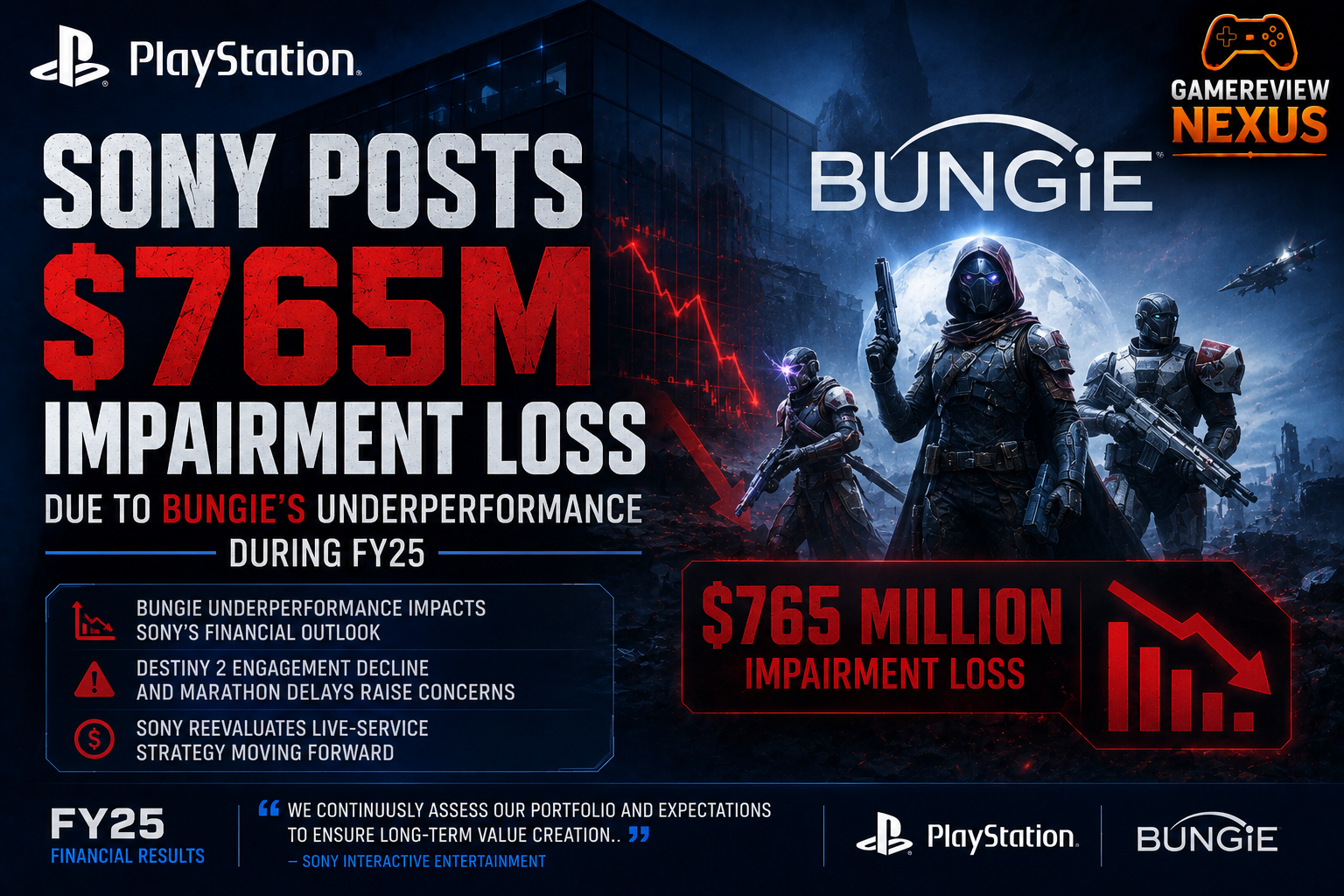
The gaming industry has witnessed another major financial shock as Sony Bungie impairment loss figures have officially reached $765 million during FY25, following Bungie’s continued underperformance after its acquisition by PlayStation.
This massive impairment charge reflects a significant reduction in the estimated value of Bungie within Sony’s portfolio and raises serious concerns regarding PlayStation’s aggressive push into the live-service gaming market.
Originally acquired by Sony Interactive Entertainment in a deal worth approximately $3.6 billion, Bungie was expected to become one of the central pillars of Sony’s long-term multiplayer and live-service ambitions.
However, recent financial results suggest the acquisition has not performed anywhere close to expectations.
💰 What Is the Sony Bungie Impairment Loss?
An impairment loss occurs when a company determines that an acquired asset is worth significantly less than initially expected.
In this case, the Sony Bungie impairment loss means Sony now believes Bungie’s business value has dropped substantially compared to the valuation attached to the acquisition.
What This Usually Indicates:
- Lower-than-expected revenue projections
- Poor business performance
- Weak future earnings expectations
- Strategic setbacks
A $765 million impairment is an enormous figure even for a company the size of Sony and reflects deeper concerns surrounding Bungie’s recent performance.
📉 Why Bungie Underperformed During FY25
Several factors appear to have contributed to the growing Sony Bungie impairment loss.
1. Declining Destiny 2 Engagement
Destiny 2 has remained Bungie’s primary revenue-driving product for years. However, player engagement and community sentiment have reportedly weakened over time.
Common Criticisms:
- Content fatigue
- Seasonal repetition
- Monetization complaints
- Slower innovation
As live-service games rely heavily on long-term retention, even small drops in engagement can significantly affect revenue.
2. Marathon Development Challenges
Marathon was expected to become Bungie’s next major multiplayer success.


Alt text: Sony Bungie impairment loss connected to Marathon and live-service strategy
However, reports surrounding the game suggest:
- Delays
- Internal restructuring
- Leadership concerns
- Uncertainty regarding player reception
The extraction shooter genre has also become increasingly competitive, creating additional pressure on Bungie’s next major project.
3. Industry-Wide Live-Service Struggles
Sony’s broader live-service strategy has also faced difficulties.
Several publishers across the industry are struggling to maintain successful live-service ecosystems due to:
- Rising development costs
- Player burnout
- Oversaturated multiplayer markets
- Increased demand for constant content updates
This context makes the Sony Bungie impairment loss part of a larger industry trend rather than an isolated issue.
🎯 What This Means for PlayStation’s Strategy
Sony previously announced ambitious plans to expand heavily into:
- Multiplayer experiences
- Games-as-a-service
- Long-term live-service ecosystems
Bungie was supposed to play a major advisory and development role in that strategy.
Now, the Sony Bungie impairment loss raises major questions:
Can Sony Successfully Compete in Live-Service Gaming?
The market is currently dominated by:
- Fortnite
- Call of Duty: Warzone
- Apex Legends
Breaking into this space consistently is extremely difficult.
📊 Financial Breakdown
| Category | Details |
|---|---|
| Bungie Acquisition Cost | ~$3.6 Billion |
| Reported Impairment Loss | $765 Million |
| Fiscal Year | FY25 |
| Main Concern | Underperformance |
| Strategic Impact | Live-service uncertainty |
This financial hit represents one of the more notable setbacks in PlayStation’s recent business strategy.
🆚 Comparison With Other Gaming Acquisitions
| Acquisition | Outcome So Far |
|---|---|
| Microsoft + Bethesda | Generally positive |
| Microsoft + Activision Blizzard | Expanding ecosystem |
| Sony + Bungie | Facing challenges |
| Embracer Group acquisitions | Mixed / restructuring |
Compared to competitors, Sony’s Bungie deal currently appears far less stable.
⚖️ Pros and Cons of Sony’s Bungie Acquisition
| Pros | Cons |
|---|---|
| Access to multiplayer expertise | Massive impairment loss |
| Strong FPS development talent | Live-service uncertainty |
| Valuable Destiny IP | Financial underperformance |
| Potential long-term recovery | High acquisition cost |
🔗 External References
For more financial details and updates, check:
- https://www.sony.com/
- https://www.bungie.net/
- https://www.playstation.com/
- https://www.ign.com/
- https://www.gamespot.com/
🔮 What Happens Next for Bungie?
Despite the large Sony Bungie impairment loss, Bungie remains one of the industry’s most experienced multiplayer studios.
Future success now heavily depends on:
- Marathon’s reception
- Destiny 2 retention improvements
- Sony’s willingness to continue investing
If Marathon succeeds, Bungie could potentially recover much of its lost momentum.
However, failure would likely intensify scrutiny surrounding Sony’s live-service ambitions.
🧾 Final Thoughts
The reported Sony Bungie impairment loss of $765 million is a major moment for the gaming industry.
It highlights how risky and unpredictable live-service gaming investments can be—even for massive corporations like Sony.
While Bungie still possesses tremendous talent and valuable IPs, the financial realities of maintaining successful live-service ecosystems are becoming increasingly difficult.
For PlayStation, this may force a reevaluation of how aggressively it pursues multiplayer and service-based strategies moving forward.
The next few years—especially the launch and performance of Marathon—could determine whether Bungie becomes a long-term recovery story or one of gaming’s biggest acquisition disappointments.