
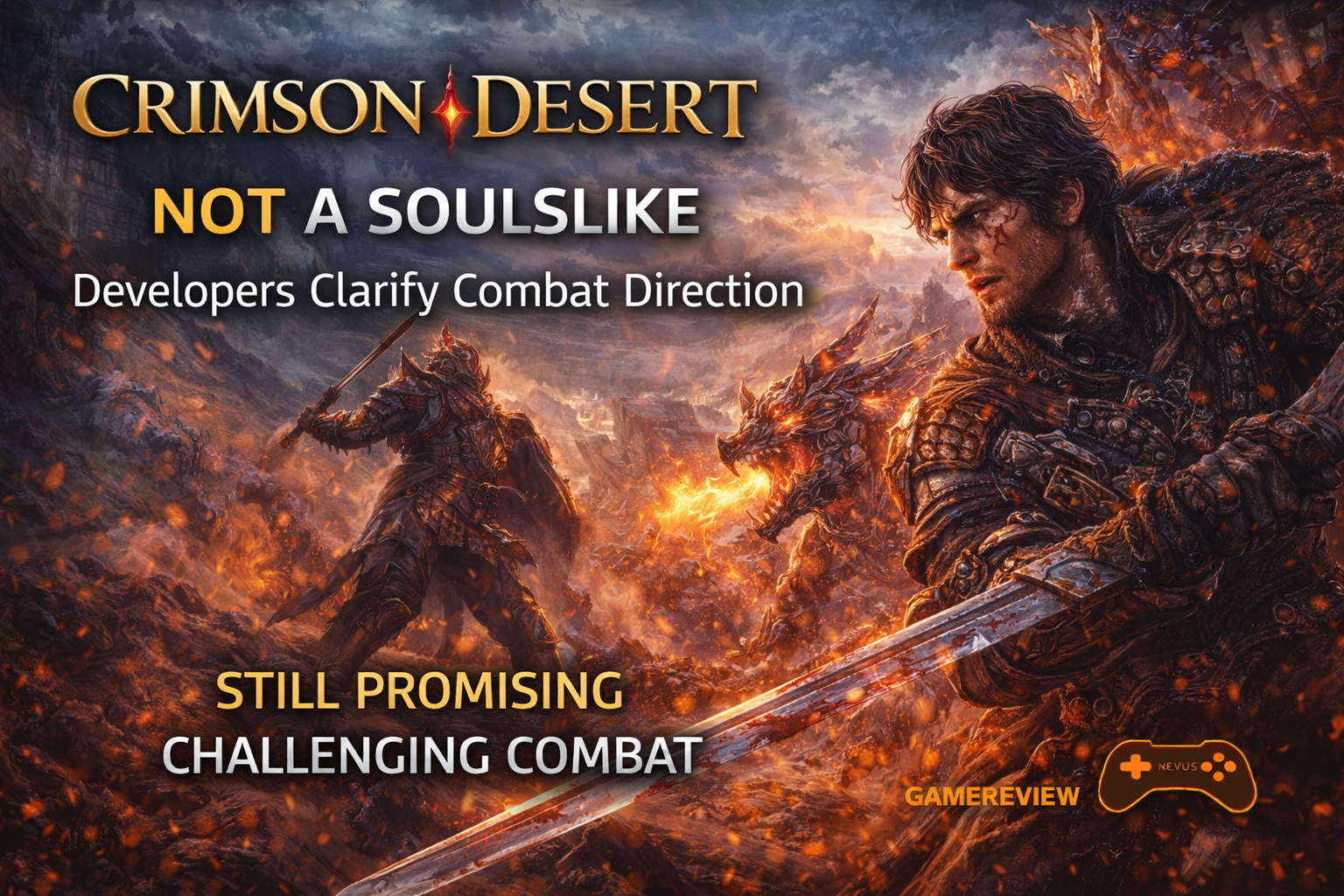
Crimson Desert Not A Soulslike has been officially clarified by its developers, who emphasize that while the game will deliver intense combat, it should not be categorized alongside traditional Soulslike titles. The clarification comes amid growing comparisons following gameplay showcases that highlighted stamina management, boss encounters, and methodical combat pacing.
Despite distancing itself from the Soulslike label, Crimson Desert is not aiming to be a casual experience. According to the development team, the action RPG will demand skill, timing, and strategic thinking.
Table of Contents
- Crimson Desert Not A Soulslike: Developer Statement
- Why Comparisons Emerged
- Combat System Breakdown
- Difficulty Without The Soulslike Label
- Open World Integration
- What This Means For Players
Crimson Desert Not A Soulslike: Developer Statement
The phrase Crimson Desert Not A Soulslike comes directly from developer clarification during recent interviews and gameplay breakdowns. While acknowledging that some combat elements may appear similar on the surface, the team stresses that the design philosophy differs fundamentally.
Key points from developers include:
- Combat designed for fluidity rather than punishment loops
- Emphasis on cinematic action
- Focus on accessibility without sacrificing challenge
- Broader RPG systems beyond boss-centric design
This distinction is important, as the Soulslike genre typically emphasizes punishing difficulty, stamina-heavy pacing, and methodical progression.
Why Comparisons Emerged
Comparisons arose after gameplay footage showcased:
- Large-scale boss encounters
- Dodge-focused mechanics
- One-on-one combat sequences
- Environmental hazards
Visually, some of these elements mirror modern Soulslike titles. However, Crimson Desert Not A Soulslike reflects a different core structure.
Unlike traditional Soulslike progression:
- The game is not built around repeated checkpoint resets
- Death does not appear to revolve around heavy resource loss mechanics
- Combat pacing appears faster and more dynamic
These differences suggest a hybrid action RPG design rather than genre imitation.
Combat System Breakdown
While Crimson Desert Not A Soulslike, combat still appears demanding.
The system includes:
- Combo-driven melee attacks
- Ranged weapon integration
- Counter mechanics
- Environmental interactions
- Physics-influenced animations
Enemy AI appears reactive rather than scripted in predictable patterns. Encounters blend cinematic camera shifts with free-form player movement.
Boss battles emphasize spectacle and scale while maintaining mechanical depth.
For official updates from Pearl Abyss, readers can visit https://www.pearlabyss.com.
Difficulty Without The Soulslike Label
The developers emphasize that Crimson Desert Not A Soulslike does not mean “easy.” Instead, difficulty is structured differently.
Rather than punishing repetition, the challenge focuses on:
- Strategic positioning
- Resource management
- Crowd control
- Adaptive combat flow
The game appears to reward mastery through build optimization and situational awareness rather than punishing death loops.
This approach could appeal to players who enjoy high-skill combat but prefer more forgiving progression systems.
Open World Integration
Unlike many Soulslike titles that emphasize interconnected linear design, Crimson Desert is built around a vast open world.
The Crimson Desert Not A Soulslike clarification also reflects this structural difference.
Open world features include:
- Expansive landscapes
- Dynamic events
- Mount traversal
- Multi-layered quest systems
Combat occurs organically within exploration rather than being confined to tightly structured arenas.
This blend of open-world freedom with intense action could position Crimson Desert uniquely within the RPG landscape.
What This Means For Players
The clarification that Crimson Desert Not A Soulslike reshapes expectations. Players anticipating strict genre mechanics may find a more fluid, cinematic action RPG experience instead.
At the same time, the game is not lowering its difficulty ceiling. Boss fights appear intense, AI behavior unpredictable, and combat layered.
If executed effectively, Crimson Desert could bridge the gap between accessible action RPG design and high-intensity combat systems.
For PlayStation hardware details, readers can explore https://www.playstation.com/en-us/ps5/.
Final Thoughts
The statement that Crimson Desert Not A Soulslike helps clarify the project’s direction while preserving anticipation for challenging gameplay.
By separating itself from genre labeling, Pearl Abyss signals confidence in its unique design philosophy. As further gameplay showcases emerge, more details about progression systems and difficulty scaling are expected.
Game Review Nexus will continue monitoring updates surrounding Crimson Desert and its development roadmap.