
PlayStation Touchscreen Controller Patent Reveals Customizable Button Layout
Table of Contents
- Introduction
- Overview Of The PlayStation Touchscreen Controller Patent
- How The Touchscreen Button System Could Work
- Why Sony Is Exploring Customizable Controller Layouts
- Potential Benefits For Accessibility And Gameplay
- How This Patent Fits Sony’s Hardware Strategy
- What This Means For The Future Of PlayStation Controllers
Introduction
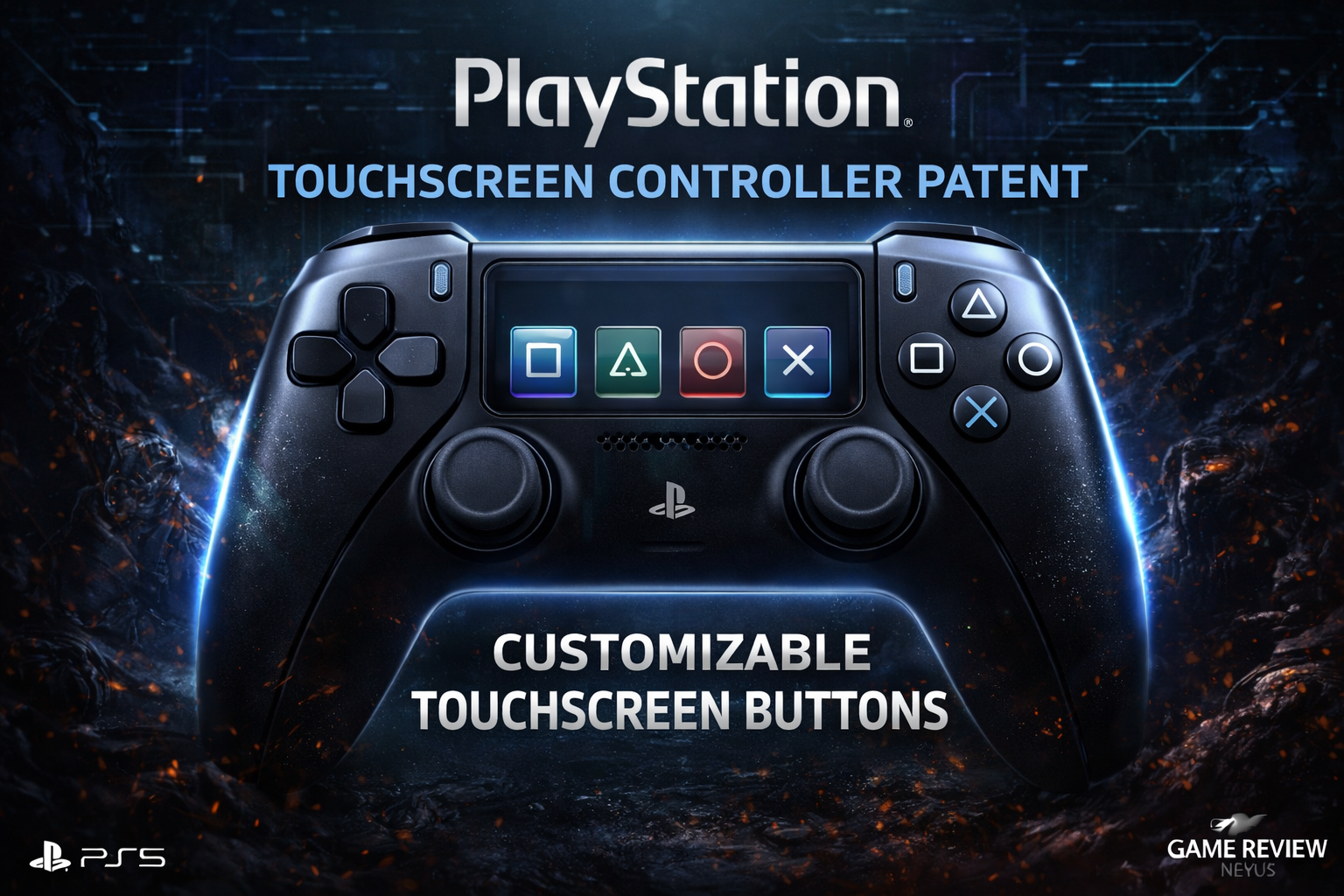
PlayStation touchscreen controller patent filings have surfaced, revealing an experimental controller concept that could dramatically change how players interact with PlayStation games. According to the patent, Sony is exploring a controller design that replaces traditional fixed button layouts with a touchscreen interface, allowing players to choose where buttons appear on the controller surface.
While patents do not always lead to commercial products, this filing provides insight into Sony’s long-term thinking around controller flexibility, accessibility, and personalization.
Overview Of The PlayStation Touchscreen Controller Patent
The newly discovered PlayStation touchscreen controller patent outlines a controller equipped with a built-in touchscreen panel. Instead of relying solely on physical face buttons, directional pads, or fixed inputs, the touchscreen would display virtual buttons that players can reposition based on preference.
The design suggests that button layouts could change dynamically depending on the game, genre, or even individual player settings. This approach represents a significant departure from the standardized layouts seen in controllers for decades.
How The Touchscreen Button System Could Work
Based on the patent documentation, the touchscreen would function as an interactive input surface capable of detecting touch, pressure, and possibly gestures. Players could drag, resize, or reassign buttons directly on the controller interface.
For example:
- Action game players could cluster frequently used commands closer together
- Racing games could emphasize analog inputs while minimizing unused buttons
- Strategy or simulation titles could introduce contextual controls without clutter
The system may also allow developers to create custom layouts tailored to specific gameplay mechanics, all while giving players the freedom to modify them.
Why Sony Is Exploring Customizable Controller Layouts
Sony has a long history of experimenting with controller features, from the DualShock’s vibration to the DualSense’s adaptive triggers and haptic feedback. This PlayStation touchscreen controller patent appears to extend that philosophy by focusing on flexibility rather than additional physical components.
Customizable layouts could reduce learning curves for new players while allowing experienced users to optimize controls for competitive play. It also opens the door to more complex control schemes without overwhelming traditional button layouts.
Potential Benefits For Accessibility And Gameplay
One of the most significant implications of this patent lies in accessibility. Customizable touchscreen buttons could allow players with different physical needs to position controls in ways that suit their comfort and ability.
This aligns with Sony’s recent accessibility-focused hardware efforts, including modular controller designs and expanded system-level accessibility options. A touchscreen-based controller could further remove barriers by offering adaptable input solutions without requiring additional peripherals.
From a gameplay perspective, dynamic controls could lead to new design possibilities, especially in genres that rely on multiple commands or contextual actions.
How This Patent Fits Sony’s Hardware Strategy
Sony frequently files patents to protect experimental ideas, many of which never reach consumers. However, the concepts explored in this PlayStation touchscreen controller patent align with broader industry trends toward personalization and adaptive hardware.
As cloud gaming, cross-platform play, and diverse input methods continue to grow, controller flexibility becomes increasingly important. This patent suggests Sony is preparing for future scenarios where a single controller design may need to support a wide range of experiences.
What This Means For The Future Of PlayStation Controllers
There is no confirmation that this touchscreen controller will become a commercial product. Still, the patent highlights Sony’s willingness to rethink traditional controller design.
Whether this idea appears in a future PlayStation generation, as an optional accessory, or simply informs later hardware decisions, it demonstrates ongoing innovation in how players interact with games.
For now, the PlayStation touchscreen controller patent stands as an intriguing glimpse into what the future of PlayStation hardware could look like.